

Share This Article
A Killeen drunk driver accident can turn your life upside down in a few seconds. One minute you are driving home. The next, you are in the emergency room with bills piling up and questions with no answers.
The good news is that you have more options than you may think. Texas law gives people hurt by drunk drivers extra ways to get paid and extra rights as crime victims. This guide explains each option in plain words. It also shares local crash numbers and the help that is close to home in Bell County.
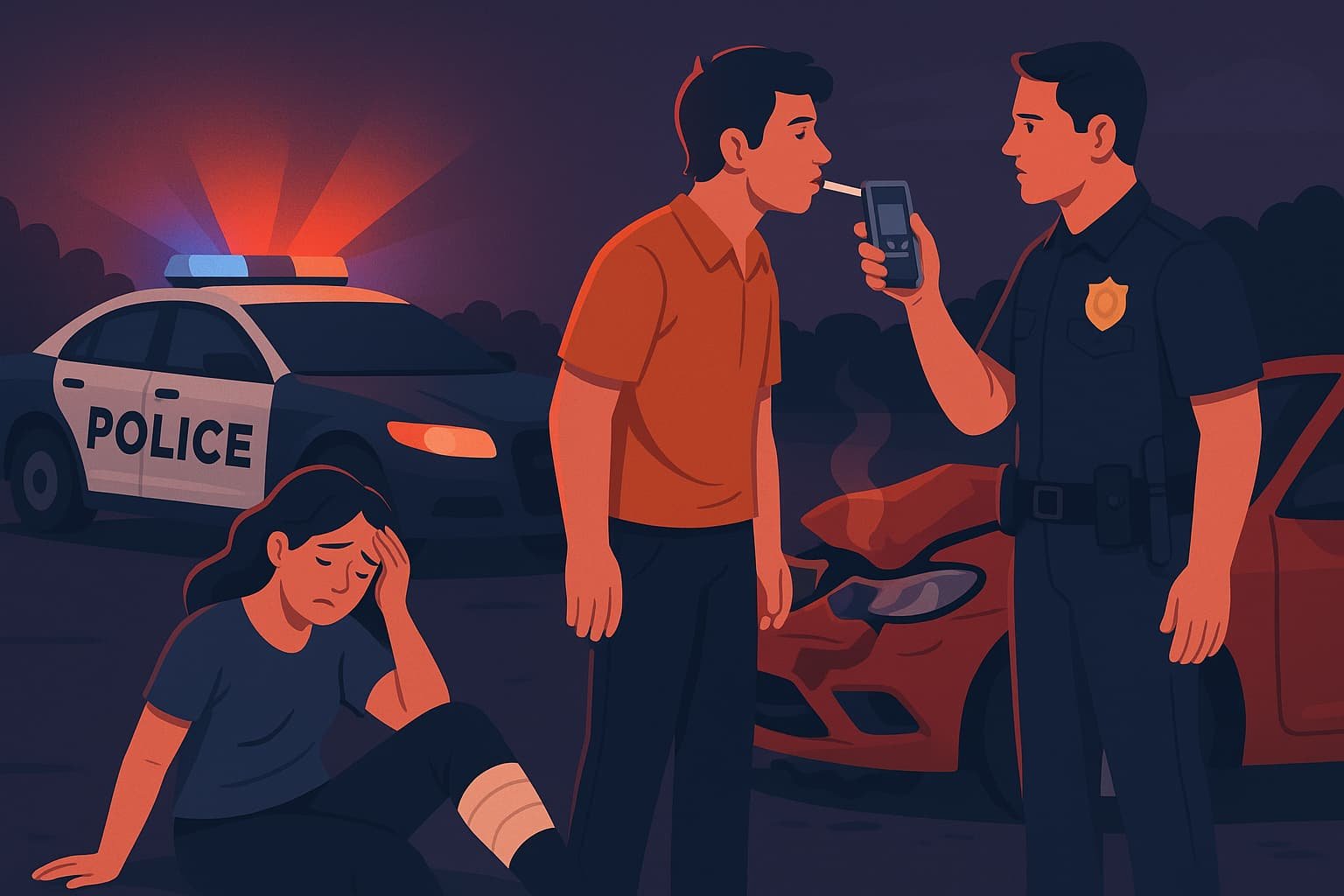
Your Options in One Minute
If you were hit by an impaired driver, you may be able to: file an insurance claim with the drunk driver’s insurer; use your own policy if the driver had little or no insurance; bring a civil lawsuit and ask for extra damages meant to punish the driver; make a claim against a bar that served the driver too much; get crime victim help, like money for counseling and a voice in the criminal case. You can use more than one of these at the same time. The sections below explain how each one works.
Drunk Driving Crashes in Bell County by the Numbers
| Year | DUI crashes | Fatal crashes | Deaths | Serious injuries |
|---|---|---|---|---|
| 2023 | 282 | 14 | 17 | 29 |
| 2024 | 239 | 14 | 16 | 21 |
| 2025 | 284 | 8 | 9 | 26 |
| 3-year total | 805 | 36 | 42 | 76 |
Deaths fell in 2025. That is good news, but one year is not a trend. In 2025, alcohol crashes were only about 4.7% of the 6,068 crashes in Bell County, yet they caused about 18% of the county’s 49 traffic deaths. Drunk driving crashes are less common, but they are far more likely to kill.
Next door in Coryell County, TxDOT counted 44 DUI crashes in 2025 and no deaths.
Which cities see the most?
| City (2025) | DUI crashes | Deaths | Serious injuries | Minor injuries |
|---|---|---|---|---|
| Killeen | 125 | 2 | 8 | 47 |
| Temple | 49 | 2 | 3 | 10 |
| Belton | 30 | 1 | 2 | 10 |
| Harker Heights | 15 | 0 | 2 | 3 |
| Copperas Cove | 15 | 0 | 0 | 5 |
Killeen had about 44% of all DUI crashes in Bell County in 2025. That makes sense, since it is the largest city in the county. Killeen had 2,104 crashes of all kinds that year.
Recent DWI Crashes in Killeen
| When | Where | What police said |
|---|---|---|
| June 2022, about 9:30 p.m. | Veterans Memorial Boulevard at Stringer Street | A car turning left did not yield to a motorcycle. The rider died. The driver was arrested for driving while intoxicated. |
| October 2022 | 5200 block of South State Highway 195 | A wrong-way driver going 88 mph crashed into another car. Blood tests showed 0.15. The other driver was flown to Baylor Scott & White and later died. The driver was indicted for intoxication manslaughter. |
| January 2025, about 2:48 a.m. | Central Texas Expressway near Weldon Way | A driver hit a pedestrian in the outside lane. The driver stopped and called 911, then faced a DWI arrest. |
| January 1, 2026, just after midnight | Near Lightning Rock Trail | A car going at a high rate of speed left the road, hit a home, and rolled. Officers on a New Year’s Eve DWI enforcement detail made the arrest. |
Notice the patterns. Many are a late-night crash. Several involve high speed. Holiday weekends draw extra patrols for a reason. And a head-on collision with a wrong-way driver is one of the deadliest crashes there is.
Your First 72 Hours
| Time | What to do |
|---|---|
| At the scene | Call 911. Tell the officer you think the other driver was drinking. Take photos of the scene, the cars, and your injuries. Get names and numbers of witnesses. |
| The same day | Get checked by a doctor, even if you feel fine. Some injuries, like a traumatic brain injury, show up later. Bell County has a Level I trauma center at Baylor Scott & White Medical Center in Temple. |
| Days 1 to 3 | Tell your own insurer about the crash. Ask for the report number. Write down everything you remember. Save every bill and receipt. |
Who writes the police report depends on where you were hit. Inside city limits, it is usually the Killeen Police Department. On some roads outside the city, it may be the Bell County Sheriff’s Office or a state trooper. You can buy the official crash report online from TxDOT’s crash records system.
Ask your lawyer to request the body camera video, the breath test or blood test results, and the officer’s notes on field sobriety tests. These can prove the driver was over the legal limit. In Texas, a blood alcohol concentration of 0.08 or higher counts as intoxicated. So does losing the normal use of your mind or body from alcohol or drugs.
Option 1: The Drunk Driver’s Insurance
Your first claim is usually against the driver’s liability coverage. Texas requires at least 30/60/25 coverage: $30,000 for each injured person; $60,000 total per crash for injuries; $25,000 for property damage. That is the minimum, and serious injuries often cost much more. Once the insurer pays its policy limits, it usually owes nothing more.
An insurance adjuster will likely call you soon. Be careful. Do not give a recorded statement before you understand your rights. Adjusters often make a quick settlement offer. A lowball offer may come before you even know how badly you are hurt. Once you sign, you usually cannot ask for more.
Option 2: Your Own Policy
Many drunk drivers have little or no insurance. About 14.5% of Texas drivers were uninsured in 2023. Your own policy can help close the gap.
- Uninsured motorist coverage pays when the driver has no insurance.
- Underinsured motorist coverage pays when the driver’s limits are too low.
- Personal injury protection (PIP) pays medical bills and lost wages, no matter who caused the crash.
- Collision coverage pays to fix your car. Ask whether your policy also pays for a rental car.
Under Chapter 1952 of the Texas Insurance Code, insurers must offer uninsured motorist coverage and PIP. You only lose them if you turned them down in writing.
Option 3: A Lawsuit and Extra Damages
You can file a civil lawsuit against the drunk driver. This is a claim for negligence, which means the driver was careless. Drunk driving breaks a safety law, so a court may treat it as negligence per se. That means the act itself can show the driver was at fault.
In a lawsuit, you can ask to be paid for: medical bills, plus future medical care; lost wages and loss of earning capacity; pain and suffering; mental anguish; physical impairment; disfigurement and scars; property damage. Serious bodily injury like broken bones or a spinal cord injury can raise the value of a case a lot. Good medical records show how badly you were hurt.
Damages meant to punish
Texas also allows punitive damages, which state law calls exemplary damages. You must prove gross negligence by clear and convincing evidence. That is a higher bar than normal. Choosing to drive drunk often meets it. Section 41.008 usually puts a damages cap on this money. But the cap does not apply when the driver’s conduct was felony intoxication assault or intoxication manslaughter. In those cases, a jury can award more.
Option 4: A Claim Against the Bar That Overserved

A bar, restaurant, or store can be liable if it overserved the driver. This is called a dram shop claim. It comes from Section 2.02 of the Texas Alcoholic Beverage Code. You must show that: it was clear the driver was drunk and a danger when they were served, and their drunkenness helped cause your crash.
Proof can vanish fast. A bar tab, card receipts, and security video can show how much the driver drank. Video may be erased in days, so act quickly.
Sellers have a defense. A business may avoid blame if its staff took seller-server training approved by TABC and the business did not push staff to break the law.
What about a house party? Texas does not usually make a social host pay when an adult guest drives drunk. But the same law has an exception for underage drinking. An adult 21 or older can be liable for knowingly serving alcohol to a minor under 18.
There may also be employer liability. If the driver was working or driving a company vehicle, the business may have to pay too. Business policies often have higher limits.
Option 5: Help for Crime Victims in Bell County
Drunk driving is a crime, so you are a crime victim. That brings real help, even before any trial.
The Bell County District Attorney: The DA for the 27th Judicial District prosecutes these cases. Its Victim Services Division can update you on the case, refer you for counseling, and help you apply for money. You can reach Victim Services at 254-933-5235.
Killeen police: The Killeen Police Department has a Victim’s Assistance office at 3304 Community Boulevard. Its crime victim liaison can explain your rights and help with forms. The number is 254-501-7698.
Your rights: Chapter 56A of the Texas Code of Criminal Procedure lists your victim rights. You can ask to be told about court dates and plea deals. You can also write a victim impact statement that tells the judge how the crash changed your life.
Money from the state: The Office of the Attorney General of Texas runs the Crime Victims’ Compensation Program. Crime victims’ compensation can help with medical care, counseling, lost pay, and funeral costs. It can pay up to $50,000 in most cases. It does not pay for pain and suffering or car damage.
Restitution: If the driver is convicted, a judge can order restitution under Article 42.037. The driver must pay back some of your costs. Keep proof of loss, like bills, receipts, and repair estimates.
Bentley’s Law: If a drunk driver kills a child’s parent, Texas law now says the court must order the driver to pay child support for that child.
Stay informed: Sign up with VINE at 1-877-894-8463 to get release notices if the driver leaves the Bell County Jail. Mothers Against Drunk Driving also offers free support to victims. Its help line is 877-MADD-HELP.
What If the Drunk Driver Was a Soldier?
Killeen sits right next to Fort Hood, so this question comes up a lot.
If an off-duty soldier hit you in a personal vehicle, your claim usually goes to the soldier’s own car insurance. It works like any other crash claim.
The Federal Tort Claims Act lets people seek money from the U.S. government when a federal worker causes harm while on the job. For soldiers, the law says “line of duty.” A soldier driving drunk on a night out is not likely to count. But if a soldier was driving a military vehicle on duty, the rules change. Talk to a lawyer who handles federal claims.
The Army can also punish the soldier. Article 113 of the Uniform Code of Military Justice makes drunk driving a military crime. It can lead to a court-martial. That case is separate from yours and does not pay you.
The Criminal Case and Your Claim
The criminal case and your injury claim run on separate tracks.
| Charge | Texas law | What it means |
|---|---|---|
| DWI | Section 49.04 | Driving while intoxicated |
| Intoxication assault | Section 49.07 | A drunk driver causes serious bodily injury |
| Intoxication manslaughter | Section 49.08 | A drunk driver causes a death |
These are all in the Texas Penal Code. Intoxication assault and intoxication manslaughter are each a felony.
You do not need to wait for criminal charges to end. You also do not need a conviction. A civil claim only has to show the driver was more likely than not at fault.
Mistakes That Can Shrink Your Claim
- Skipping the doctor. Gaps in care let the insurer say you were not really hurt.
- Talking too much. Anything you say to the other insurer can be used to cut your claim.
- Posting online. Photos of you out and about can be used against you.
- Waiting too long. Bar video disappears, and witnesses forget. Get witness statements while memories are fresh.
- Ignoring fault rules. Texas uses proportionate responsibility under Chapter 33. If you are found more than 50% at fault, you get nothing. The defense may say you were not wearing a seat belt or were speeding. Good proof helps.
When a Drunk Driver Takes a Life
Losing someone to a drunk driver is one of the hardest things a family can face. Chapter 71 of the Civil Practice and Remedies Code allows two kinds of claims: a wrongful death claim lets the spouse, children, and parents seek money for their own losses; a survival claim lets the estate seek what the person could have claimed if they had lived. Families may also ask for exemplary damages.
Deadlines You Cannot Miss
| What | Deadline |
|---|---|
| Injury or wrongful death lawsuit | Two years, under Section 16.003 |
| Crime victims’ compensation | Usually three years |
| Notice to your own insurer | As soon as you can |
| Saving bar video | Days, so act fast |
The two-year statute of limitations is strict. If you miss this two-year deadline, you may lose your right to sue.
Frequently Asked Questions
The driver was never charged with DWI. Can I still file a claim?
Yes. Your insurance claim and lawsuit do not depend on a criminal case. You only need to show the driver was more likely than not at fault. Drinking is one way to prove it, but not the only way.
Do I have to wait for the criminal case to end?
No. The two cases move on their own. In fact, waiting can hurt you, because the two-year clock keeps running.
What if a soldier from Fort Hood hit me?
Most of the time, you file against the soldier’s own auto insurance. A federal claim only fits if the soldier was on duty. Get advice early, since federal claims have their own forms and deadlines.
How much is my case worth?
Every case value is different. It depends on your injuries, your bills, your lost pay, how much insurance is available, and whether exemplary damages apply. A bar’s insurance can add another source of money.
Do I need a lawyer?
You do not have to hire one. But drunk driving cases often involve criminal records, bar evidence, and several insurers. Most personal injury lawyer offices give a free consultation. Many work on a contingency fee, which means they only get paid if you do.
Disclaimer: This article is for general information only. It is not legal advice. Every crash is different. For help with your own case, talk to a licensed Texas attorney.
